It’s true that more searches are ending without a website click. However, this doesn’t mean SEO is becoming less valuable; it means its role is evolving. Today’s goal isn’t just to generate clicks, but to ensure your business is visible wherever potential customers are searching, whether that’s on Google, AI-powered search engines, or other search experiences.
For years, SEO success was measured by rankings and website traffic. If your page ranked first and users clicked through to your website, your strategy was working.
Google now provides answers directly on the search results page through featured snippets, knowledge panels, local packs, and AI Overviews. At the same time, AI tools like ChatGPT, Gemini, and Perplexity are helping people find information without requiring them to visit multiple websites.
This shift has introduced a new challenge for businesses. If people are getting answers before they reach your website, how do you stay visible?
The answer isn’t to stop investing in SEO. Instead, businesses need to rethink what success looks like. Visibility, brand recognition, authority, and being referenced by search engines and AI systems are becoming just as important as website traffic.
In this guide, you’ll learn what zero-click search is, why it’s becoming more common, how it affects SEO, and the practical strategies businesses can use to remain visible in a search landscape where not every search results in a click.
1. What Is a Zero-Click Search?
A zero-click search is a search where the user finds the information they need without clicking through to a website. Instead, the answer is provided directly on the search results page or within an AI-generated response.
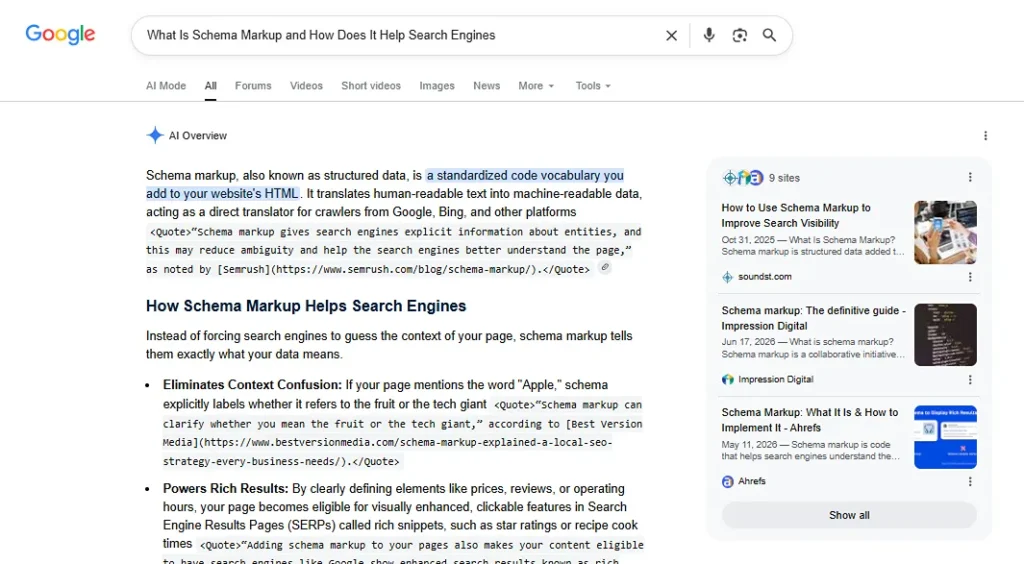
Rather than visiting multiple websites, users can often get immediate answers through Google’s search features or AI-powered search experiences. This creates a faster search experience for users while changing how businesses think about online visibility.
Zero-click searches can happen in many different ways, including:
- Featured snippets
- Knowledge panels
- Local packs
- Google AI Overviews
- Weather forecasts
- Currency conversions
- Sports scores
- Definitions and quick answers
For example, if someone searches “What is zero-click search?”, Google may display a featured snippet summarising the answer without requiring the user to open a website.
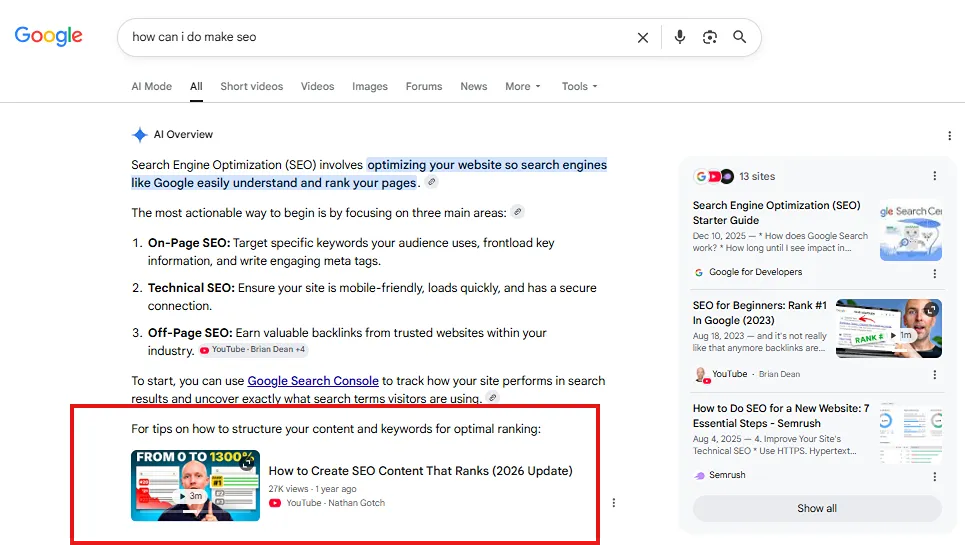
Similarly, someone asking ChatGPT or Google AI Overviews “How can I improve my website’s SEO?” may receive a complete answer generated from multiple sources without clicking on any individual page.
This doesn’t mean websites have become less important. Instead, it means businesses need to create content that is valuable enough to be surfaced, cited, or referenced within these search experiences.
2. How Does Google Answer Questions Without Website Clicks?
More searches are ending without a click because search engines are increasingly providing answers directly on the results page. Instead of sending users to a website immediately, Google and AI-powered search tools aim to deliver the information users need as quickly as possible.
Over the past few years, Google has introduced more search features that reduce the need to visit another website. At the same time, AI-powered search experiences have made direct answers even more common by generating complete responses from multiple sources.
Featured Snippets
Featured Snippets provide a direct answer to a user’s question at the top of Google’s search results. They typically display a short paragraph, numbered list, bulleted list, or table extracted from a webpage.
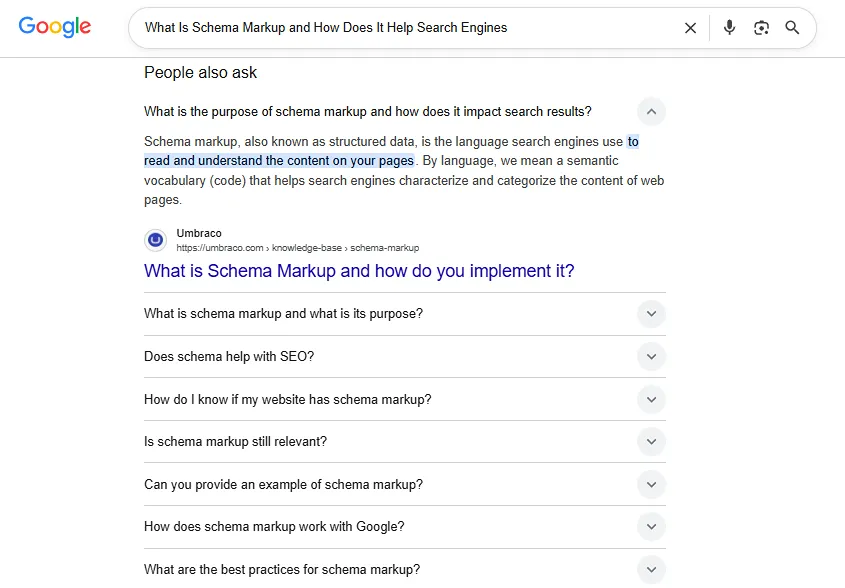
These results are designed to help users find information quickly, often without needing to click through to a website. While this can reduce website traffic for some queries, it also places your content in one of the most prominent positions on the search results page.
Featured Snippets commonly appear for searches such as:
- How does schema markup work?
- What is technical SEO?
- How do you improve website speed?
- What is zero-click search?
Although users may not always visit your website, appearing in a Featured Snippet can help:
- Increase brand visibility
- Position your business as a trusted source
- Improve brand recognition
- Increase the likelihood of future branded searches
For businesses publishing educational content, Featured Snippets remain one of the most valuable search features because they allow your expertise to appear before the traditional organic results.
Knowledge Panels
Knowledge Panels display key information about businesses, organisations, people, and places directly within Google’s search results. They help users quickly understand who a business is without visiting its website.
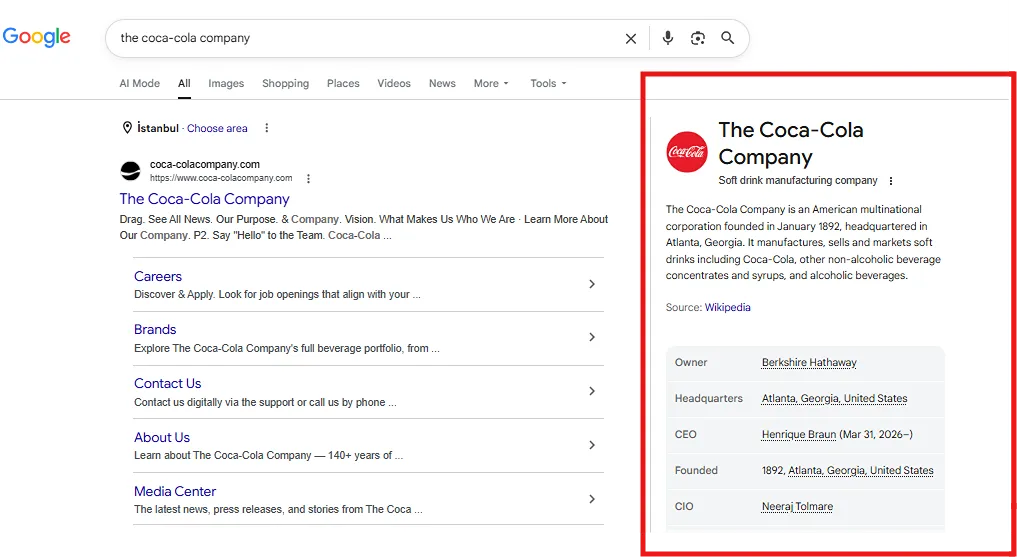
Google builds Knowledge Panels by combining information from trusted sources and publicly available data. For businesses, they often include:
- Business name
- Website
- Contact details
- Opening hours
- Location
- Reviews and ratings
- Social media profiles
For example, someone searching for a well-known company may immediately see its website, contact information, reviews, and company description within the Knowledge Panel.
Even if users don’t click through, this visibility strengthens brand awareness and helps establish credibility before they interact with your business.
Local Packs
Local Packs appear when users search for businesses or services in a specific location. Rather than displaying only traditional search results, Google highlights a selection of nearby businesses with essential information.
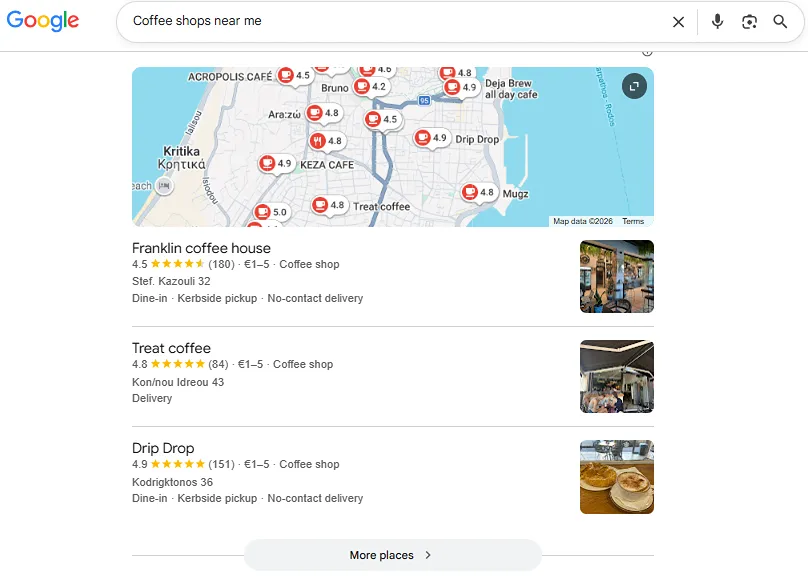
A Local Pack typically includes:
- Business name
- Google rating
- Opening hours
- Address
- Phone number
- Directions
- Website link
For example, searches such as:
- Coffee shops near me
- Dentist in Manchester
- Digital marketing agency in London
often trigger a Local Pack before the organic search results.
For many local businesses, appearing in the Local Pack is just as valuable as ranking organically because it allows potential customers to compare nearby options without leaving the search results page.
Google AI Overviews
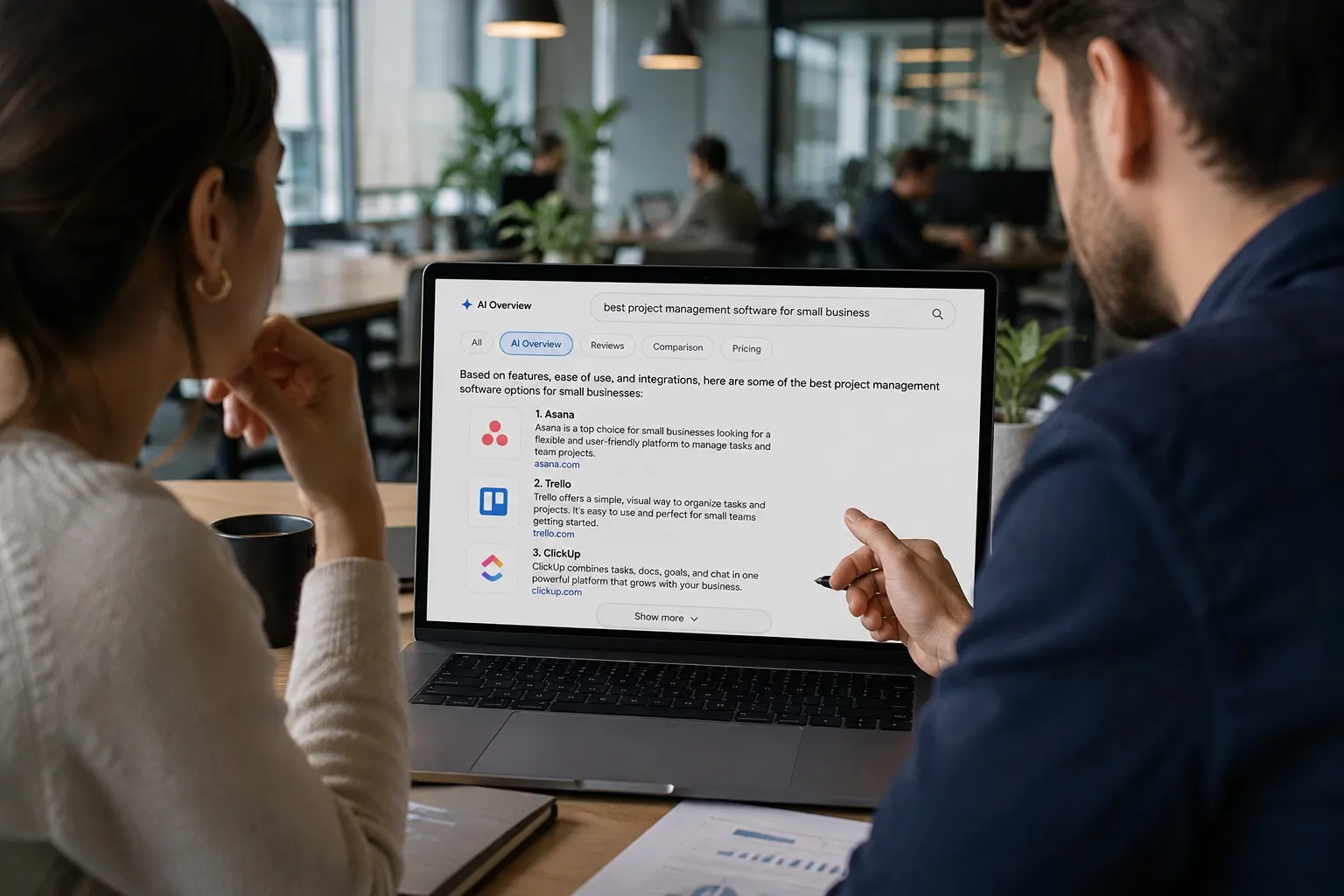
Google AI Overviews generate conversational answers by combining information from multiple trusted sources across the web. Instead of presenting only links, Google summarises the information users are looking for and may reference the websites that contributed to the answer.
Unlike Featured Snippets, AI Overviews often combine insights from several websites to create a more comprehensive response.
For example, a search like:
- How can a small business improve SEO?
may generate an AI Overview summarising recommendations from multiple trusted sources before displaying the traditional search results.
This represents one of the biggest shifts in modern search. Businesses are increasingly competing not only for clicks but also for the opportunity to be included as one of the sources AI uses when generating answers.
Direct Answers
Direct Answers provide immediate responses to simple factual questions without requiring users to visit another website. They are designed to deliver information as quickly as possible within the search results page.
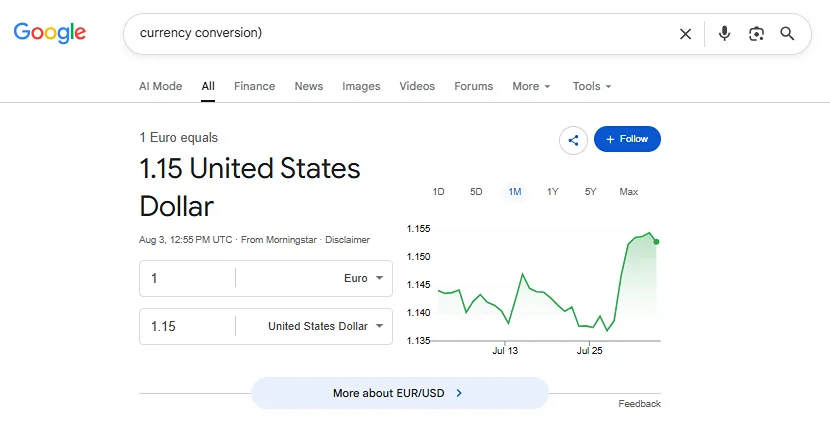
Common examples include:
- Weather forecasts
- Currency conversions
- Unit conversions
- Sports scores
- Time zones
- Mathematical calculations
- Definitions
These searches are unlikely to generate website traffic because the user’s question has already been answered.
However, they demonstrate how user behaviour is changing. People increasingly expect search engines and AI tools to provide immediate answers, making it even more important for businesses to create content that is clear, accurate, and easy for machines to understand.
3. Does Zero-Click Search Mean SEO Is Dead?
Zero-click search doesn’t mean SEO is dead; it means the way businesses measure SEO success is changing. Visibility, authority, and brand recognition are becoming just as important as website traffic.
For years, SEO was largely measured by rankings and clicks. The higher your website ranked, the more traffic you were expected to receive. While rankings and traffic are still valuable, they’re no longer the only indicators of success.
Today, your content can influence a customer’s decision before they ever visit your website. A featured snippet, AI Overview, or Knowledge Panel may answer their question, introduce your brand, or establish your expertise without generating an immediate click.
This shift doesn’t reduce the importance of SEO, it expands its role. Businesses now need to optimise for both traditional search results and AI-powered search experiences.
Instead of asking “How do I get more clicks?”, businesses should also ask:
- Is my brand visible when people search for topics related to my business?
- Does my content answer the questions my audience is asking?
- Is my business being referenced in AI-generated responses?
- Am I building trust before a customer even visits my website?
The businesses that adapt to this shift won’t focus solely on rankings. They’ll focus on becoming trusted sources of information that search engines and AI systems are confident recommending.
4. Is Zero-Click Search Still Valuable for Businesses?
Even when users don’t click on your website, appearing in search results can still influence their decisions. Visibility builds familiarity, trust, and credibility, often long before someone becomes a customer.
A click isn’t the only valuable outcome of a search. Every time your business appears in a Featured Snippet, AI Overview, Local Pack, or Knowledge Panel, you’re increasing the chances that potential customers will remember your brand and return when they’re ready to take action.
As search continues to evolve, visibility is becoming an increasingly important part of the customer journey.
Brand Awareness
Appearing in zero-click search results helps more people discover your business, even if they don’t immediately visit your website. Every appearance increases familiarity and makes your brand more recognisable over time.
For example, imagine someone researching “how to choose the right accounting software.” They may see the same software company appear in a Featured Snippet, an AI Overview, and several educational articles. Even without clicking, repeated exposure makes that brand more familiar.
Strong brand awareness can lead to:
- Increased recognition across search results
- Greater trust before a customer visits your website
- More branded searches in the future
- Higher confidence when comparing different providers
In many cases, customers don’t choose the first business they see, they choose the one they remember.
Brand Recall
The more often people see your brand associated with helpful information, the easier it becomes to remember when they’re ready to make a decision. Brand recall often develops through multiple search interactions rather than a single website visit.
For example, someone researching “best project management software for remote teams” may repeatedly come across the same company through AI Overviews, comparison articles, and search results. Weeks later, when they’re ready to purchase, that brand is already familiar.
Brand recall is strengthened when your business:
- Consistently publishes educational content
- Appears across multiple search experiences
- Maintains a recognisable brand identity
- Solves real customer problems through its content
Even if the first interaction doesn’t generate a click, it can influence future buying decisions.
Authority
Appearing in search features and AI-generated answers helps position your business as a trusted source of information. When your content is consistently surfaced for relevant topics, users begin to associate your brand with expertise.
For example, a healthcare provider that regularly publishes reliable articles about preventive care, health screenings, and common medical conditions is more likely to be viewed as an authoritative source than a website with only a few general service pages.
Authority is strengthened by:
- Publishing accurate and helpful content
- Covering industry topics consistently
- Earning mentions from reputable websites
- Demonstrating genuine experience and expertise
- Keeping content up to date as information changes
Over time, these signals strengthen your reputation across both traditional search and AI-powered search.
Future Branded Searches
Many customers don’t convert during their first search. Instead, they return later by searching specifically for a business they’ve already encountered through search results or AI-generated answers.
For example, someone researching “best CRM for small businesses” may notice the same software company appearing across multiple search results. A few days later, instead of repeating the original search, they searched directly for that company’s name.
The journey might look like this:
- Search: “best CRM for small businesses”
- Discover a brand through an AI Overview or Featured Snippet
- Continue researching different options
- Later search for that specific brand by name
- Visit the website and request a demo
Zero-click visibility often plays an important role in creating these branded searches, even when no click happens during the first interaction.
Influence Before Conversion
Modern search isn’t a single event, it’s a series of interactions. Every time your business appears in search results, you have another opportunity to build trust before a customer is ready to convert.
Consider someone planning a home renovation. Before contacting a contractor, they might:
- Search for renovation ideas
- Read an AI Overview about budgeting
- See the same construction company featured in several educational articles
- Search for reviews a few days later
- Visit the company’s website when they’re ready to request a quote
Only one of these interactions results in a website visit, but every previous touchpoint helped build confidence in the business.
This is why businesses should measure more than just clicks. Visibility throughout the customer journey can influence awareness, trust, and purchasing decisions long before a conversion takes place.
5. How Can Businesses Win in a Zero-Click Search World?
Businesses can succeed in a zero-click search environment by creating content that’s easy for search engines and AI systems to understand, reference, and trust. Rather than focusing only on rankings, the goal is to maximise your visibility across every stage of the search journey.
As search behaviour continues to evolve, businesses should prioritise strategies that increase brand recognition, topical authority, and the likelihood of being featured in search results, even when a website click doesn’t happen immediately.
Optimize for Answers, Not Just Keywords
People no longer search using only keywords, they ask complete questions. Creating content that provides direct, helpful answers makes it easier for both search engines and AI systems to surface your content.
Instead of targeting a keyword like “email marketing”, think about the questions your audience is asking, such as:
- How do I start an email marketing campaign?
- How often should I send marketing emails?
- What is the best email marketing platform for small businesses?
- How do I improve my email open rate?
Start each section with a clear answer before expanding on the topic. This approach not only improves readability but also increases your chances of appearing in Featured Snippets, AI Overviews, and other zero-click search features.
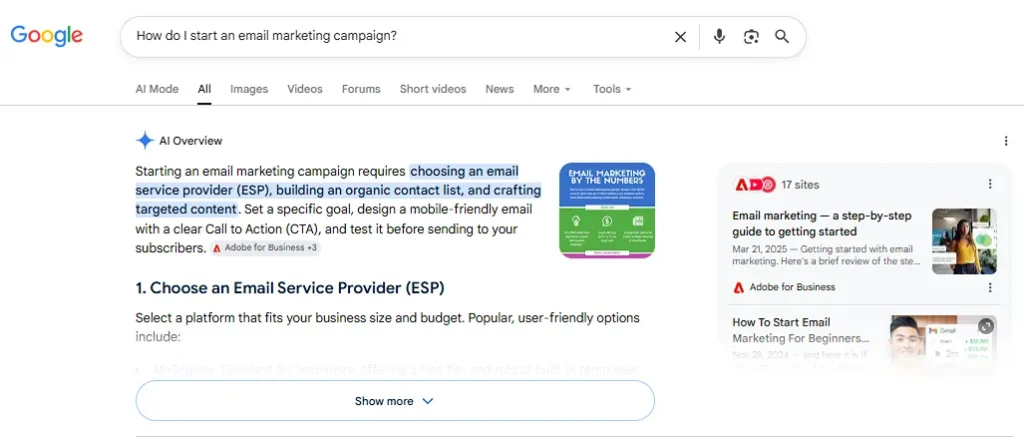
Answering real user questions clearly and early increases the likelihood of appearing in zero-click search features.
Build Brand Recognition
The more familiar people become with your brand, the more likely they are to trust it when they’re ready to make a decision. Zero-click visibility often contributes to brand recognition long before someone visits your website.
A strong brand is built through repeated exposure across different search experiences. Whether someone sees your business in an AI Overview, a Featured Snippet, or a Google Business Profile, every appearance helps reinforce your presence.
You can strengthen brand recognition by:
- Publishing helpful content consistently
- Maintaining a consistent visual identity
- Appearing across multiple search features
- Building an active presence on trusted platforms
- Ensuring your business information is consistent everywhere
Over time, repeated visibility makes your business easier to recognise and remember.
Create Content Worth Citing
AI systems are more likely to reference content that provides unique value rather than repeating information already available elsewhere. Original, well-researched content gives search engines and AI models a stronger reason to use your website as a source.
Content worth citing often includes:
- Original research or survey results
- Industry case studies
- Practical step-by-step guides
- Expert insights and opinions
- Real examples and comparisons
Instead of asking, “How much content should we publish?”, ask “Would another website or AI assistant find this information valuable enough to reference?”
That’s the type of content that earns visibility in both traditional and AI-powered search.
Optimize for Featured Snippets
Featured Snippets provide direct answers to users’ questions at the top of Google’s search results. Structuring your content to answer questions clearly can increase your chances of being featured in these prominent positions.
Although Google ultimately decides which content appears as a Featured Snippet, there are several best practices that can improve your chances:
- Use question-based headings that match real search queries.
- Answer the question clearly within the first few sentences.
- Break down complex topics into logical sections.
- Use bullet points, numbered lists, and tables where appropriate.
- Support your answer with additional context, examples, and practical advice.
For example, instead of writing a long introduction before answering “What is technical SEO?”, provide a concise definition first, then expand on the topic with more detailed explanations.
This structure not only improves the user experience but also makes it easier for search engines to identify and surface key information.
Strengthen Your Entity Signals
Search engines and AI systems don’t just analyse webpages, they identify entities such as businesses, people, products, and services. Strengthening these entity signals helps machines understand exactly who you are and what your business represents.
A well-defined entity is built through consistent information across your digital presence. The easier it is for search engines to connect your website with trusted information elsewhere, the more confidence they have in understanding your business.
Strong entity signals include:
- A consistent business name across all platforms
- A detailed About Us page
- Author profiles with clear expertise
- Google Business Profile
- Consistent contact information
- Structured data that identifies your organisation
- Mentions from trusted third-party websites
For example, if your company information is identical across your website, LinkedIn, Google Business Profile, and business directories, search engines can more confidently recognise them as referring to the same business.
Use Structured Data
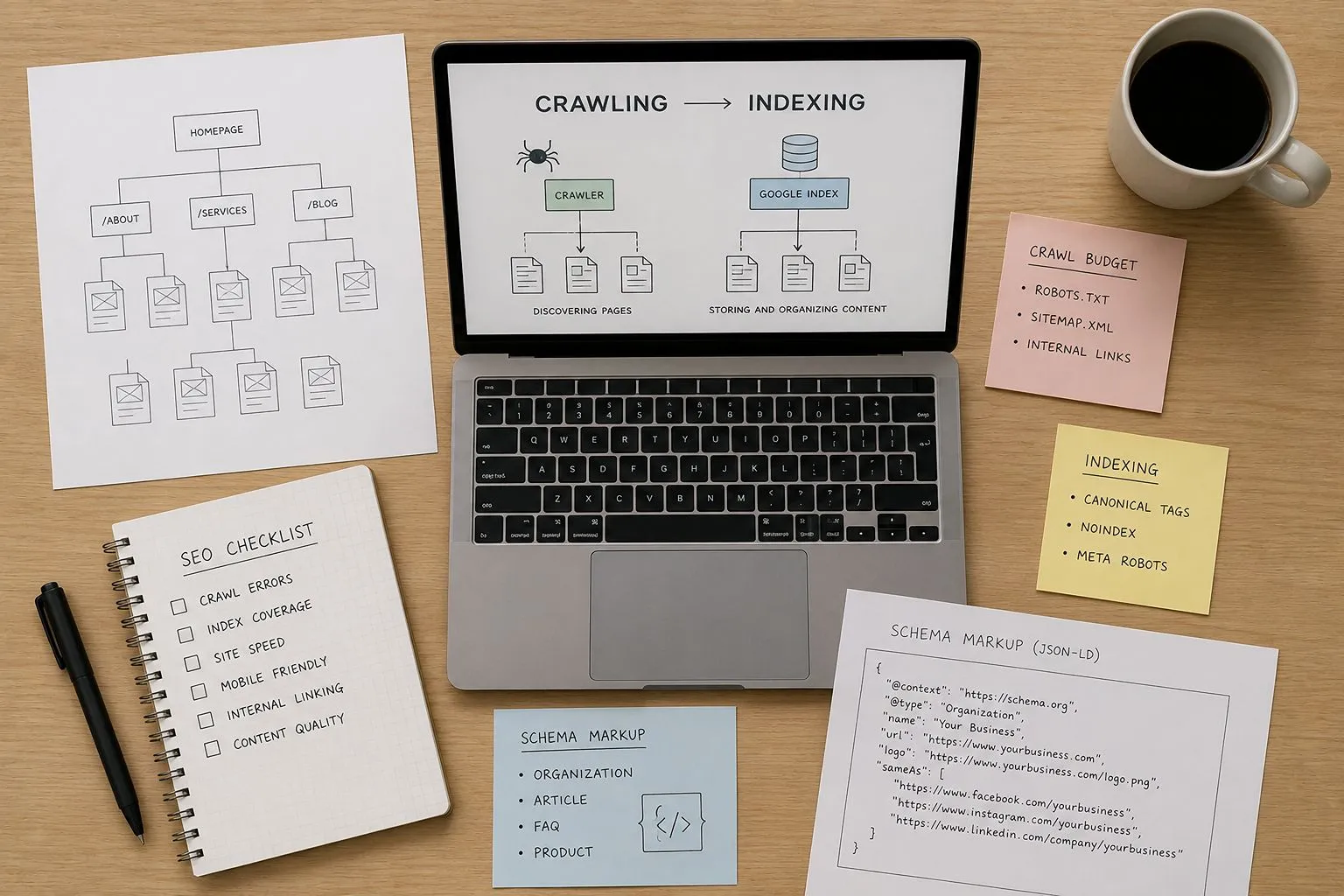
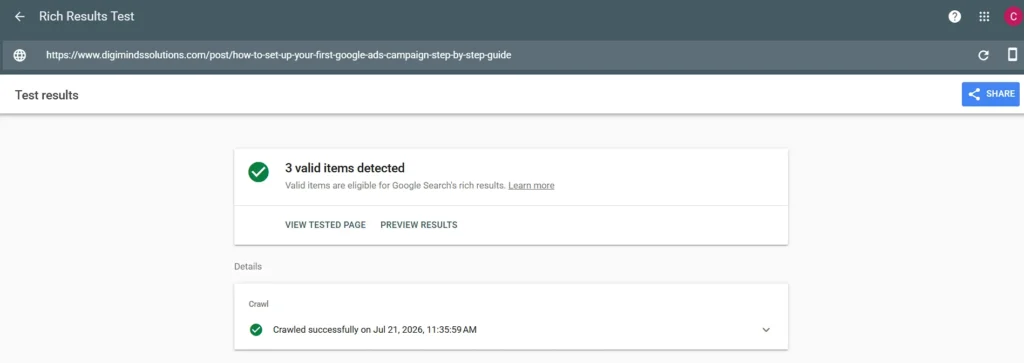
Structured data provides additional context about your website by organising information in a format that search engines can easily understand. While it doesn’t guarantee visibility, it helps clarify important information about your business and content.
Schema markup can describe many different elements of your website, including:
- Your organisation
- Services
- Articles
- Authors
- FAQs
- Website structure
When combined with high-quality content and a strong technical SEO foundation, structured data helps reduce ambiguity and supports both traditional search engines and AI-powered search experiences.
If you’d like to explore this topic in more detail, read our complete guide to Schema Markup and How It Helps Search Engines and AI Understand Your Business.
Measure Visibility Beyond Website Traffic
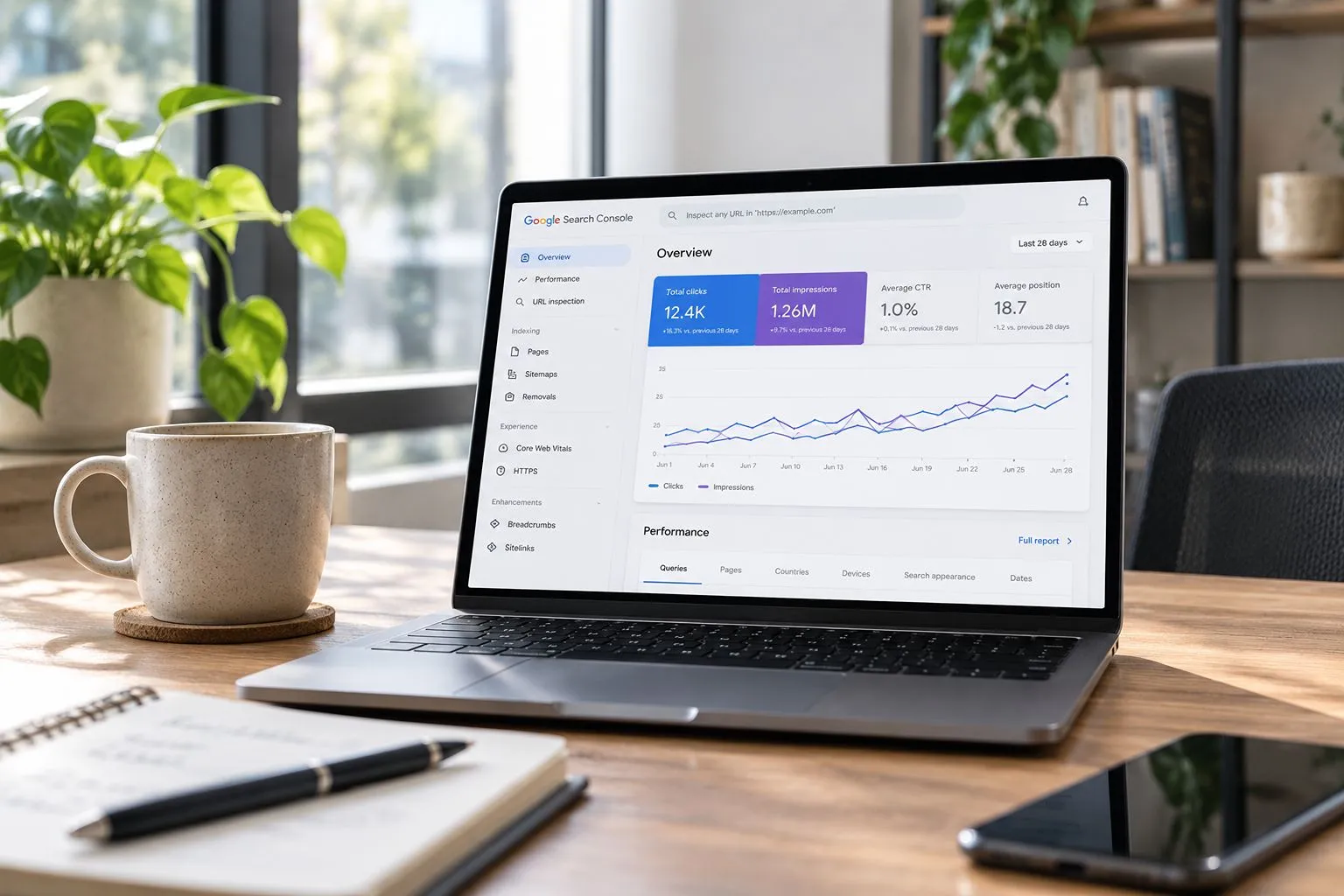
Clicks are no longer the only measure of SEO success. As zero-click search becomes more common, businesses should also monitor how visible and recognisable their brand is across search experiences.
While website traffic remains an important metric, it doesn’t always reflect the full impact of your SEO efforts. A user may discover your brand through an AI Overview, a Featured Snippet, or a Knowledge Panel and return later through a branded search.
Consider tracking metrics such as:
- Organic impressions
- Branded search volume
- Featured Snippet ownership
- AI mentions
- Google Business Profile views
- Conversion rate from organic search
Looking beyond clicks provides a more complete picture of how search is influencing awareness, trust, and business growth.
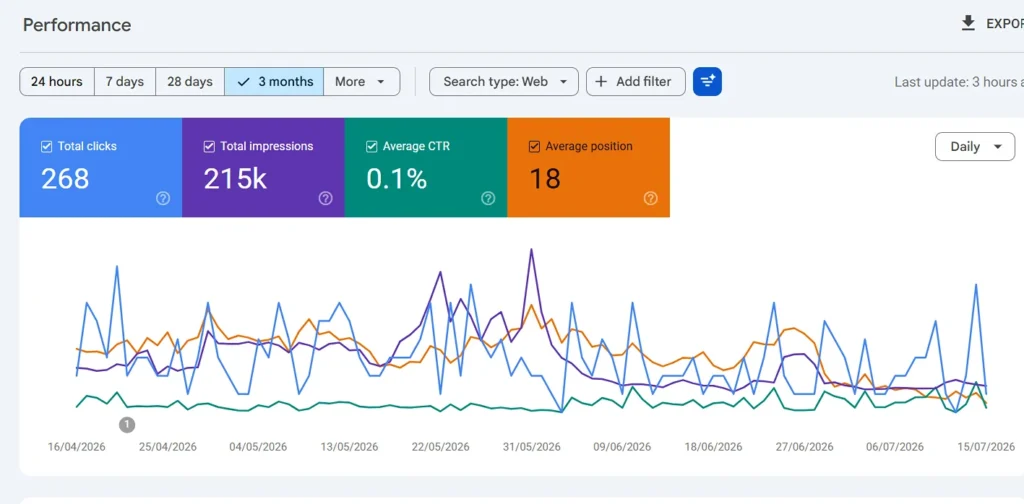
6. How Should You Measure SEO When Clicks Are Declining?
As zero-click searches become more common, businesses should evaluate SEO using a broader set of performance metrics rather than relying on clicks alone. Visibility, brand recognition, and conversions are becoming just as important as website traffic.
A decline in clicks doesn’t necessarily mean your SEO strategy is becoming less effective. Your content may still be appearing in AI Overviews, Featured Snippets, Local Packs, or other search features where users can discover your brand without immediately visiting your website.
Instead of focusing on a single metric, consider measuring SEO performance across multiple indicators.
| Traditional SEO Metrics | Modern SEO Metrics |
| Organic Clicks | Organic Impressions |
| Keyword Rankings | Search Visibility |
| Website Sessions | Brand Recognition |
| Organic Traffic | Branded Search Growth |
| Bounce Rate | AI Mentions & Citations |
| Click-Through Rate (CTR) | Conversions & Leads |
Modern SEO doesn’t replace traditional metrics, it expands them. While clicks, rankings, and traffic still matter, businesses should also measure how visible, recognisable, and influential their brand has become across both traditional search and AI-powered search experiences.
Rather than relying on a single metric, businesses should evaluate SEO performance using a combination of visibility, brand, and business metrics, including:
- Impressions: Measure how often your website appears in search results, even when users don’t click. Growing impressions often indicate that your overall search visibility is increasing.
- Share of Search: Track how frequently people search for your brand compared to competitors. An increase often reflects stronger brand awareness and market presence.
- Branded Search Growth: Monitor searches that include your business name. More branded searches usually indicate that users recognise and remember your brand after encountering it in search results.
- AI Mentions: Periodically check whether your business appears in AI-generated answers from platforms such as ChatGPT, Google AI Overviews, Gemini, or Perplexity. These mentions can provide valuable insight into your growing AI search visibility.
- Featured Snippet Ownership: Identify which queries your website owns Featured Snippets for. Appearing in these prominent positions can strengthen visibility and establish your business as a trusted source.
- Conversions: Measure meaningful business outcomes such as enquiries, purchases, demo requests, or contact form submissions. Ultimately, SEO success should be evaluated by its contribution to business growth, not just traffic.
7. What Does Zero-Click Search Mean for Your SEO Strategy?
Zero-click search doesn’t mean businesses should invest less in SEO, it means they should optimise for visibility as well as traffic. The businesses that adapt will focus on becoming trusted sources of information wherever people search.
SEO is no longer just about ranking first and earning a click. Today’s search landscape includes AI Overviews, Featured Snippets, Knowledge Panels, Local Packs, and AI-powered search assistants that often answer users’ questions before they visit a website.
This doesn’t reduce the value of SEO, it changes what success looks like.
A modern SEO strategy should aim to:
- Create content that directly answers real customer questions.
- Build topical authority by covering subjects comprehensively.
- Strengthen brand recognition across search experiences.
- Improve entity signals through consistent business information.
- Use structured data to help search engines better understand your website.
- Measure visibility using metrics beyond clicks alone.
Businesses that continue measuring SEO only by rankings and traffic risk overlooking the broader impact search has on brand awareness, trust, and future customer acquisition.
As search continues to evolve, successful SEO strategies will combine technical optimisation, high-quality content, and long-term authority building to increase visibility across both traditional search engines and AI-powered search experiences.
8. Key Takeaways: Winning in a Zero-Click Search World
Zero-click search is changing how people discover businesses, but it isn’t reducing the importance of SEO. Instead, it encourages businesses to focus on creating content and experiences that build visibility, trust, and authority across every stage of the search journey.
The most important points to remember are:
- Zero-click search is changing how users interact with search results, but SEO remains essential.
- Visibility is becoming just as valuable as website traffic.
- Helpful, question-focused content is more likely to appear in Featured Snippets and AI-generated answers.
- Building brand recognition and topical authority increases long-term search visibility.
- Structured data and strong entity signals help search engines better understand your business.
- Success should be measured through visibility, branded searches, AI mentions, and conversions, not clicks alone.
- Businesses that invest in long-term SEO foundations will be better positioned as search continues to evolve.
9. How DigiMinds Helps Businesses Adapt to the New Search Landscape
Zero-click search is changing how businesses measure SEO success, but it doesn’t change the importance of building a strong online presence. As search engines and AI-powered search experiences continue to evolve, businesses need strategies that improve both visibility and long-term organic growth.
At DigiMinds Solutions, we help startups, small businesses, and growing brands adapt to this changing search landscape through technical SEO, content strategy, entity optimisation, structured data, and website performance improvements. Our approach focuses on helping businesses become more visible across traditional search results, AI-generated answers, and other emerging search experiences.
Rather than focusing solely on rankings or website traffic, we help businesses build a stronger digital foundation that supports brand awareness, authority, and sustainable growth as search continues to evolve.
10. FAQ
1. Does zero-click search mean people no longer visit websites?
No. While many searches now end without a click, users still visit websites when they need more detailed information, compare providers, or are ready to make a purchase. Zero-click search changes the customer journey rather than replacing websites altogether.
2. Can small businesses benefit from zero-click search?
Yes. Businesses of all sizes can increase their visibility by creating helpful content, building authority, and appearing in search features such as Featured Snippets, Local Packs, and AI-generated answers.
3. Can zero-click searches generate leads?
Yes. Even without an immediate website visit, appearing in search results can increase brand awareness, build trust, and encourage future branded searches that lead to enquiries and conversions.
4. Should I stop focusing on website traffic?
No. Website traffic remains an important SEO metric, but it shouldn’t be the only measure of success. Businesses should also evaluate visibility, branded search growth, AI mentions, and conversions.
5. How can I increase my chances of appearing in AI-generated answers?
Focus on publishing helpful content, strengthening your technical SEO, building topical authority, using structured data, and maintaining consistent business information across trusted platforms.
6. Are Featured Snippets and AI Overviews the same thing?
No. Featured Snippets usually display a direct answer from a single webpage, while AI Overviews generate a response by combining information from multiple trusted sources.
7. Can my business benefit from zero-click search even if users don’t visit my website?
Yes. Zero-click search can increase brand awareness, strengthen credibility, and influence future purchasing decisions even when users don’t click through immediately. Repeated visibility in search features such as AI Overviews, Featured Snippets, and Local Packs helps users become familiar with your business, making them more likely to search for your brand or contact you later.
11. Contact & Support
Search is evolving, and businesses that adapt early will be better positioned to stay visible as user behaviour continues to change. Building a successful SEO strategy today means balancing traditional optimisation techniques with approaches that improve visibility across AI-powered search experiences and zero-click search results.
At DigiMinds Solutions, we help businesses create future-ready SEO strategies through technical optimisation, content planning, structured data implementation, and long-term authority building. Whether you’re looking to improve your organic visibility, strengthen your brand, or prepare for the future of search, our team is here to help.
Contact us at +90 507 830 2127 or info@digimindssolutions.com to discuss your SEO goals and discover how a tailored strategy can help your business remain visible in today’s evolving search landscape.
References:
- Semrush: https://www.semrush.com/blog/zero-click-searches/
- Wikipedia: https://en.wikipedia.org/wiki/Zero-click_result
- Forbes: https://www.forbes.com/sites/bernardmarr/2025/08/07/what-is-zero-click-and-why-is-it-turning-marketing-on-its-head/
- Neil Patel: https://neilpatel.com/blog/zero-click-searches/